
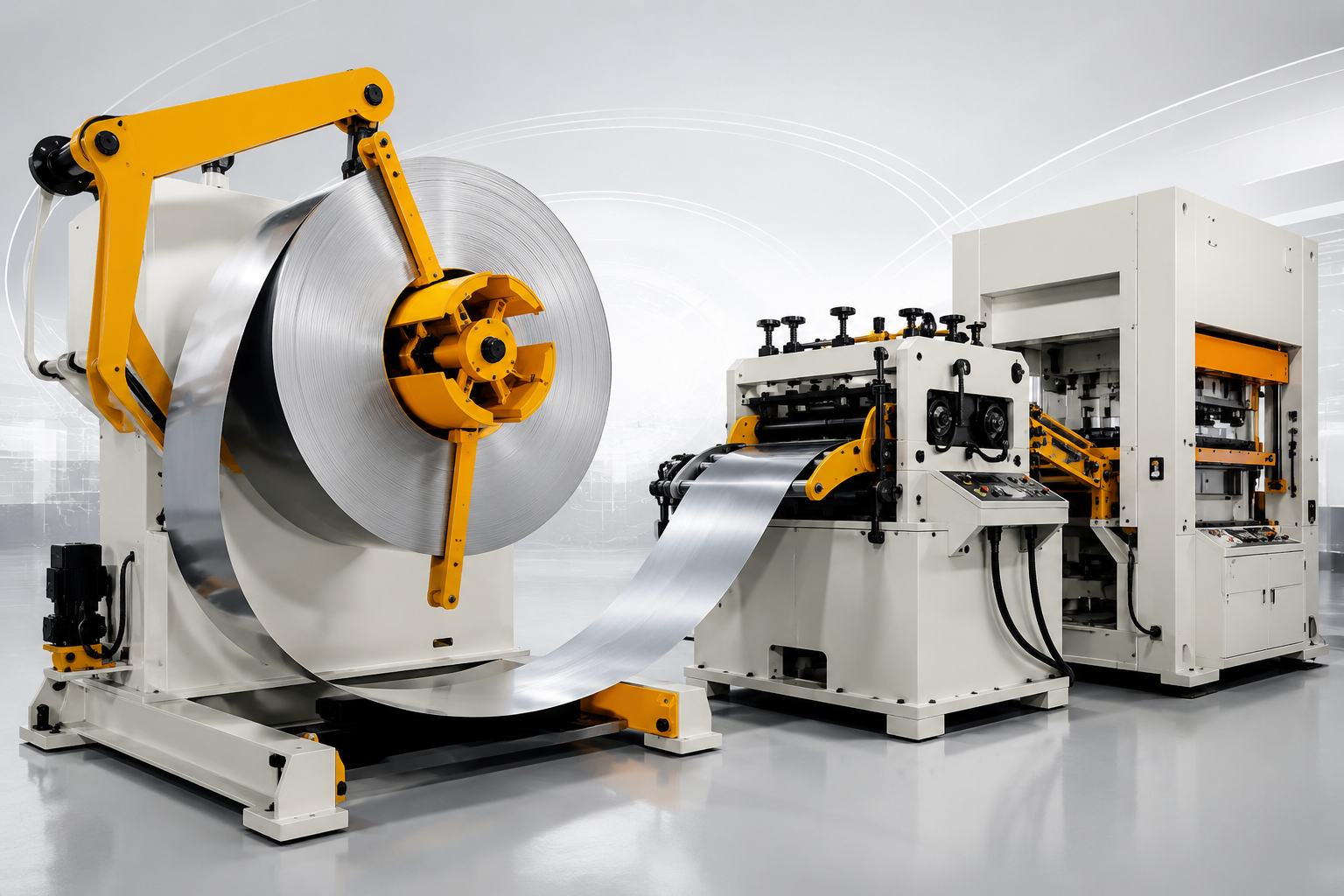
A Coil Feeding Machine automatically feeds metal coils into presses, cutting lines, and processing equipment with high precision. By ensuring accurate material positioning, consistent feeding speed, and reduced human error, it significantly minimizes scrap generation, lowers operating costs, improves production efficiency, and increases overall manufacturing output.
In today's competitive manufacturing landscape, reducing production costs while maximizing efficiency has become a top priority. Industries involved in sheet metal processing, automotive manufacturing, appliance production, and metal fabrication continuously seek solutions that improve productivity without compromising quality.
One of the most effective technologies helping manufacturers achieve these goals is the Coil Feeding Machine. Designed to automate the feeding of metal coils into processing equipment, these machines play a critical role in minimizing material waste, improving precision, and streamlining production workflows.
Whether you're processing steel, aluminum, stainless steel, or other metal materials, a modern coil feeding system can dramatically improve operational performance while reducing unnecessary expenses.
What is a Coil Feeding Machine?
A Coil Feeding Machine is an automated material handling system that feeds metal coils into presses, stamping machines, cut-to-length lines, roll forming systems, and other metal processing equipment.
The machine ensures that material is delivered consistently and accurately throughout the production cycle.
Key Components Include:
- Decoiler
- Straightener
- Servo feeder
- Coil handling system
- Control panel
- Material guiding system
Together, these components create a seamless production process that reduces manual intervention and increases manufacturing precision.
Why Material Waste is a Major Manufacturing Challenge
Material waste directly impacts profitability. Even small inaccuracies in feeding can result in:
- Excess scrap generation
- Misaligned cuts
- Product defects
- Increased raw material consumption
- Higher labor costs
- Longer production times
For manufacturers processing thousands of tons of metal annually, even a 2-5% reduction in waste can translate into significant cost savings.
This is where advanced coil feeding technology becomes a valuable investment.
How Coil Feeding Machines Reduce Material Waste
1. Precise Material Positioning
One of the primary causes of waste in metal processing is inaccurate material feeding.
A modern Coil Feeding Machine uses servo-controlled technology to maintain exact feeding lengths and positioning.
Benefits include:
- Accurate blank sizes
- Reduced cutting errors
- Consistent product dimensions
- Minimal scrap generation
With precise positioning, manufacturers can maximize material utilization from every coil.
2. Elimination of Human Error
Manual feeding processes are prone to mistakes such as:
- Incorrect feed lengths
- Misalignment
- Inconsistent material flow
- Improper coil handling
Automation removes these variables by ensuring repeatable and accurate feeding throughout production.
As a result:
- Scrap rates decrease
- Quality consistency improves
- Production interruptions are minimized
3. Better Coil Utilization
Advanced feeding systems optimize the use of every coil.
By maintaining controlled feeding and minimizing leftover material, manufacturers can extract maximum value from raw materials.
This leads to:
- Lower material consumption
- Improved inventory efficiency
- Reduced disposal costs
4. Consistent Material Straightening
Many coil feeding systems include integrated straighteners that remove coil set and material curvature before processing.
Straightened material improves:
- Cutting accuracy
- Stamping precision
- Product quality
Better material preparation means fewer rejected parts and less wasted metal.
How Coil Feeding Machines Increase Production Efficiency
Faster Production Speeds
Automated feeding systems can operate continuously at high speeds without fatigue or interruptions.
Compared to manual operations, manufacturers can achieve:
The result is increased throughput and improved operational efficiency.
Reduced Downtime
Unexpected stoppages often occur when operators manually load or adjust materials.
Coil feeding systems reduce downtime through:
- Automatic feeding
- Continuous operation
- Quick setup adjustments
- Improved workflow integration
Less downtime means more production hours and higher profitability.
Improved Workforce Utilization
Automation allows skilled operators to focus on higher-value tasks instead of repetitive feeding operations.
Benefits include:
- Better labor productivity
- Reduced operator fatigue
- Improved workplace safety
- Enhanced process monitoring
Manufacturers can achieve more output without increasing workforce costs.
Seamless Integration with Automated Lines
Modern Coil Feeding Machines integrate easily with:
- Press feeding systems
- Roll forming lines
- Cut-to-length machines
- Slitting lines
- Stamping operations
This creates a fully automated production environment that improves efficiency from start to finish.
Industries Benefiting from Coil Feeding Machines
Automotive Manufacturing
Automotive components require exceptional precision and consistency.
Coil feeding systems help manufacturers:
- Reduce metal waste
- Increase production speed
- Maintain strict quality standards
Electrical Appliance Production
Manufacturers producing washing machines, refrigerators, and air conditioning systems rely on accurate sheet metal processing.
Automated feeding ensures uniform component production with minimal scrap.
Construction and Infrastructure
Steel panels, roofing products, and structural components require efficient material handling.
Coil feeding machines improve output while reducing production costs.
Metal Fabrication
Fabrication facilities processing large volumes of sheet metal benefit from:
- Faster processing
- Better material utilization
- Reduced operational expenses
Practical Example: Cost Savings Through Automation
Consider a manufacturing facility processing 1,000 tons of steel annually.
If manual feeding generates a scrap rate of 5%, the company wastes approximately 50 tons of steel each year.
By implementing an advanced Coil Feeding Machine and reducing waste to 2%, scrap decreases to only 20 tons.
Annual Savings:
- Material saved: 30 tons
- Reduced disposal costs
- Lower labor expenses
- Increased production capacity
Over time, these savings can significantly exceed the initial investment in automation equipment.
Expert Tips for Maximizing Coil Feeding Machine Performance
Regular Maintenance
Routine inspections help maintain:
- Feeding accuracy
- Servo performance
- Mechanical reliability
Train Operators Properly
Even automated systems perform best when operators understand:
- Machine settings
- Material specifications
- Preventive maintenance procedures
Choose the Right System
Consider:
- Coil width
- Material thickness
- Production volume
- Required feeding accuracy
Selecting the correct machine ensures optimal performance and return on investment.
Monitor Production Data
Modern feeding systems provide valuable operational insights.
Tracking production metrics helps identify opportunities for:
- Waste reduction
- Efficiency improvements
- Process optimization
Future Trends in Coil Feeding Technology
Manufacturing automation continues to evolve.
Emerging innovations include:
- Industry 4.0 integration
- Smart sensors
- Predictive maintenance
- AI-driven process optimization
- Remote monitoring systems
These technologies further improve productivity while helping manufacturers achieve greater material efficiency.
Frequently Asked Questions (FAQs)
1. What is the main purpose of a Coil Feeding Machine?
A Coil Feeding Machine automatically feeds metal coils into production equipment with precision, helping reduce material waste and improve efficiency.
2. How does a Coil Feeding Machine reduce scrap?
It ensures accurate feeding lengths, proper alignment, and consistent material flow, minimizing errors that lead to waste.
3. Which industries commonly use Coil Feeding Machines?
Industries such as automotive, appliance manufacturing, construction, metal fabrication, and sheet metal processing widely use these systems.
4. Can Coil Feeding Machines improve production speed?
Yes. Automated feeding significantly increases throughput by reducing manual handling, downtime, and operational delays.
5. Is investing in a Coil Feeding Machine cost-effective?
Absolutely. Reduced material waste, lower labor costs, improved productivity, and higher product quality typically provide a strong return on investment.
Conclusion
A modern Coil Feeding Machine is much more than a material handling solution—it is a strategic investment that directly impacts profitability, productivity, and manufacturing quality. By reducing scrap, improving feeding accuracy, minimizing human error, and enabling continuous production, these systems help manufacturers achieve greater operational efficiency and long-term cost savings.
As industries continue to embrace automation and smart manufacturing practices, coil feeding technology will remain an essential component of efficient metal processing operations.
Call to Action
Looking to improve production efficiency and reduce material waste in your manufacturing facility?
Highmach CTL specializes in advanced Coil Feeding Machines, Coil Processing Lines, Cut-to-Length Machines, Slitting Lines, and customized metal processing solutions designed for modern industries.
Contact us today, call now, or visit us to discover how Highmach CTL can help optimize your production processes and maximize profitability.